

Newborn Care: How to Take Care of a Newborn Baby
First Weeks With Your Newborn
What to expect
Expect to feel tired for a little while. Try to rest when baby rests. Newborn babies typically sleep 16-20 hours a day in total so it will give you plenty of time to rest. Eat smart and be smart with the visitors. If you are breastfeeding, you will need to eat plenty of nutritious foods as your health is paramount. The nutrients and the immune system in your body will be passed to your baby.
Accept as much support as you can from your partner and family. If your partner can take a week or two off work, this will give you both time to bond with your newborn. Your partner or family can also take over some of the day-to-day chores so you can rest, particularly if you are breastfeeding. If you are bottle-feeding, your partner can help too. If it’s not possible for your partner to get time off, see if a close relative can come and provide the same kind of care.
Holding a Baby
One hand must hold the baby’s head and neck or cradling his head around the arm. The other hand to carry or cradle his body. We must continue holding baby like that until he can support his head which normally takes a few weeks and months. You will know that he can support his head when he can already flip to lay on his tummy and lift his/her up like below baby image. Watch the above video for more tips on holding baby

Feeding
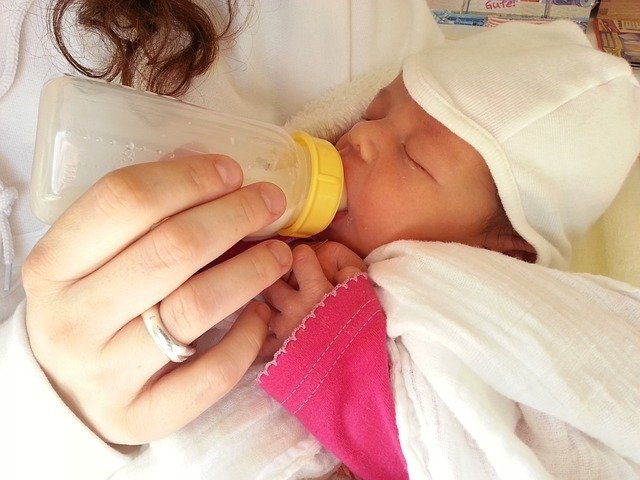
Newborn babies tend to feed every two to four hours – some days more often, especially if baby is breastfed. It can also be several weeks before a pattern of feeding and sleeping emerges.
In the first few weeks a newborn will feed regularly during the day and night. Babies have very small stomachs and need to feed very often. Formula takes longer to digest than breast milk and this can be the reason why bottle-fed babies sometimes feed less than breastfed babies.
Breastfeeding can be a learning experience for some new moms. From finding a comfortable breastfeeding position, avoiding sore nipples, until some breastfeeding facts are covered in the breastfeeding tips post.
Sleeping
Newborns can sleep for up to 18-20 hours in a 24-hour period, but some do not. All babies are individuals and will have different sleep patterns and needs. Sometimes their sleep will follow a pattern for a few days and then change.
After the first couple of weeks, babies commonly have one five-to-six-hour sleep, several two-to-three-hour sleeps and some shorter naps.
In order to keep a baby settles, we should create a similar environment as they were when in mothers womb, by wrapping them in baby wrap, so they can feel protected and will not startle. Make sure the cloth used for baby wrap is from breathable material to avoid overheating the baby.

Changing Nappies/Diapers
The first few days after born, newborn babies stools are normally black in color and sticky. This is called meconium and it is normal as it contains mucus, skin cells, and amniotic fluid which were ingested while the baby was in the womb. This black stool usually does not smell.
Over the first few days, the color of the stool should gradually change from black to dark green, then yellow. After 1 week, stool should no longer be black. If a black color persists, seek medical advice. It could mean that there is some bleeding in the digestive system.
There are a few range of choice when it comes to nappies. It will depend on your comfort, budget, and convenience in deciding which one is the best for your baby. Most parents will choose disposable nappies/diapers for their babies due to convenient reasons. However, if you are an environmentally conscious parent and do not mind to wash, then reusable clothes diapers are suitable choices.
Beside nappies, there are also other necessities or items that you will need to make changing nappies easier, faster, and more comfortable both for you and your baby. It is also important to prevent health issues such as infections and nappy rashes.





Leave a Reply
Want to join the discussion?Feel free to contribute!